Secret CISO 10/10: 360K iRhythm Patients, Live Nation IDs, Frontline SSNs, Atlassian File-Read
Today’s thread is “trusted third parties, trusted defaults.” iRhythm’s breach is a reminder that attackers don’t need your core systems if they can reach your hosted apps, your vendors, or your employee HR stack. Plus: Frontline’s K-12 ripple, Live Nation’s silent filing, and a critical Atlassian Da
Today is what “soft spots in hard perimeters” looks like: attackers go around your core network by leaning on hosted business apps, logistics vendors, and admin platforms. Your controls still matter, they just need to extend to the places your data actually lives.
Today's Top 5
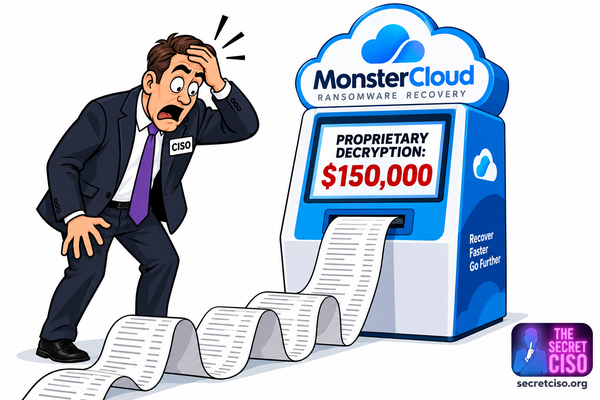
- 360K iRhythm victims: A medical device company says unauthorized access to third-party hosted apps exposed data for at least 360,000 people, with state filings lighting up this week. The extortion message reportedly came fast, before the full scope was even nailed down. Source
- Live Nation’s quiet filing: Live Nation shows up in Vermont with only 2 residents listed, but the data types include Social Security numbers, government IDs, and health records. No public narrative, no breach date, just a very loud set of fields. Source
- Frontline vendor blast radius: School districts are warning staff that a Frontline Education incident may have exposed employee and applicant data, including Social Security numbers, with notifications starting later this month. This is exactly how a single edtech vendor becomes a statewide identity event. Source
- Critical Atlassian Data Center file-read: Atlassian says an unauthenticated attacker can access specific files under the web app root across multiple self-managed Data Center products. It does not enumerate directories, but it does not need to, if the file path is predictable. Source
- SonicWall SMA1000 max-severity SSRF: SonicWall published fixes for a pre-auth SSRF rated 10.0 in SMA 1000 Series, plus additional issues in the same advisory. If you still have these exposed, you are living life on hard mode. Source
Why today matters: Three of today’s biggest risk stories are not “new malware,” they are dependency failures: third-party hosted business apps (iRhythm), a ubiquitous vendor platform (Frontline), and a registry-level paper trail with no public incident story (Live Nation). Attackers are optimizing for places where your monitoring is weakest and your contracts are vaguest. If your IR plan stops at “our corporate network,” you are already behind.
Alright, let’s get into the receipts.
Data Breaches
- Hundreds of thousands impacted by data breach at biosensor firm iRhythm: Recorded Future News reports iRhythm said at least 360,000 people were affected after unauthorized access to third-party systems in June, with major state filings showing 298,647 in Texas and 69,526 in South Carolina. The detail CISOs should notice is the combination of hosted apps plus extortion pressure, which tends to force rushed scoping decisions. Source: The Record
- Live Nation Entertainment, Inc. appears in Vermont breach notices: Vermont’s AG breach log lists Live Nation with 2 affected Vermonters and data types including Social Security numbers, government ID numbers, and health records. Even if the VT count is tiny, the categories imply the incident could be tied to a system with very sensitive data classes. Source: Vermont Attorney General
- Frontline Education incident hits districts: Waco ISD says Frontline disclosed an Aug. 14 incident, with exposed district employee and job applicant info including Social Security numbers, email addresses, and physical addresses. Waco says Frontline will begin notifying impacted individuals on Oct. 26 and is offering two years of monitoring via TransUnion. Source: Waco ISD
- Frontline breach coverage details third-party vuln: BleepingComputer reports Frontline told districts attackers leveraged a vulnerability in a third-party application to access part of Frontline’s environment, with employee PII including Social Security numbers exposed. The vendor has not named the third-party product, which makes compensating controls and detection harder for customers. Source: BleepingComputer
- Post Holdings: breach filing and notification timeline: Class Action U summarizes a Post Holdings incident first detected Aug. 20, with notification completed Oct. 7, and impacted data described as names and driver’s license numbers in the referenced filing. If you do business with large consumer brands, this is your reminder to treat HR and vendor portals as production data stores. Source: Class Action U
Security Research
- Atlassian Data Center arbitrary file access: Atlassian published CVE-2026-21589 affecting multiple self-managed Data Center products, allowing unauthenticated access to specific files within the web application root (with prior path knowledge). Cloud products are patched, but on-prem teams need to move now. Source: Atlassian
- SonicWall SMA 1000 Series multiple vulns: SonicWall’s SNWLID-2026-0017 advisory covers a pre-auth SSRF rated 10.0 and additional flaws in SMA1000 firmware. The operational risk is simple: these boxes live on the edge and rarely get the patch urgency they deserve. Source: SonicWall
- Tenable ships new WordPress SQLi CVEs: Tenable Research Advisories list two WordPress “Post Author” SQL injection issues with CVE IDs issued on Oct. 9. These will get quietly mass-scanned because WordPress always does, and because “authenticated” still becomes “public” in real deployments. Source: Tenable
- Cisco publishes SSRF in Finesse: Cisco PSIRT details an SSRF (CVE-2026-20362) in Cisco Finesse, including affected releases and fixed versions. This is the kind of bug that becomes an internal pivot if your contact center stack sits near privileged network zones. Source: Cisco
- Citrix NetScaler active exploitation alerting guidance: Australia’s ACSC published an alert stating Citrix NetScaler ADC/Gateway vulnerabilities are under active exploitation and urging immediate patching, pointing to Citrix’s indicators of compromise and guidance. This is a strong signal for any org that still treats ADCs as “network gear” instead of a public-facing app platform. Source: ACSC
Top CVEs
- CVE-2026-21589: A critical arbitrary file access issue impacting multiple Atlassian Data Center products, where an unauthenticated attacker can access specific files under the web app root if the path is known. The impact depends on what lives at predictable paths in your environment, including config artifacts and integration secrets. Source
- CVE-2026-102255: A max-severity pre-auth SSRF in SonicWall SMA 1000 Series (WorkPlace interface) with a 10.0 rating in SonicWall’s advisory. If exploited, SSRF on an edge access device is often step one to credential theft, lateral movement, and persistence. Source
- CVE-2026-102256: SonicWall SMA 1000 Series remote code execution issue included in the same SNWLID-2026-0017 advisory, rated high severity. Even when a bug is “post-auth,” real incidents routinely start with stolen creds from earlier access paths. Source
- CVE-2026-108124: Tenable lists this as a WordPress “Post Author Authenticated SQLi” issue, published Oct. 9 in its research advisories. SQLi in CMS land turns into credential stuffing fuel and database exfil quickly, especially on sites with reused admin accounts. Source
- CVE-2026-108125: Tenable lists this as a WordPress “Post Author Second Order SQLi” issue, also published Oct. 9. Second-order SQLi is the one that hides in the queue, executes later, and makes incident timelines look like lies. Source
Podcasts & Talks
- SANS Stormcast, Thursday Oct 8, 2026: A tight briefing that name-checks Atlassian CVE-2026-21589, ccTLD compromise context, and attachment abuse trends. Useful as a quick “what should I page my team about” listen. Listen: Apple Podcasts
Final Words
The uncomfortable pattern today is that the breach boundary is drifting away from systems you can actually instrument. Third-party hosted business apps, K-12 workforce platforms, and “quiet” regulator filings all bypass classic detection assumptions. The implication most coverage misses is simple: your best EDR and network telemetry can be perfect and you can still lose, because the data is leaving from someone else’s stack on someone else’s logs.
This week, do three things:
- Patch all self-managed Atlassian Data Center products for CVE-2026-21589, then rotate secrets stored in predictable config locations (especially integration credentials).
- Upgrade SonicWall SMA 1000 Series to fixed hotfix versions per SNWLID-2026-0017 and review any Internet-exposed SMA endpoints for unexpected outbound requests consistent with SSRF.
- Inventory any Frontline Education usage across HR, applicant tracking, and health services, then pre-brief HR and payroll teams on SSN-driven phishing and fake “credit monitoring enrollment” lures.
Your turn: If an extortion note landed tomorrow saying it pulled data from a “third-party hosted business application,” would your team know which vendor logs to demand in the first hour, or would you spend that hour guessing? Hit reply with your answer, or drop a comment on the web version. I read every reply.
Know someone running Atlassian Data Center who thinks “file-read is not that bad”? Forward them this issue, because config files are basically the keys to the kingdom. For forwarded and web readers, subscribe free at secretciso.org.
Stay vigilant, stay informed, and see you in the next edition of Secret CISO!