Secret CISO 9/23: 246K Govt Records, BIG-IP Zero-Day, Muse Hotfix, Entra MFA Trap
Japan’s Digital Agency says 246,000 personnel records may have leaked after a VPN-device flaw. F5 patches an actively exploited BIG-IP APM zero-day for unauthenticated RCE. Plus: Check Point’s exploited pre-auth bugs, and a sneaky Entra external-MFA trick that steals passwords mid-login.

Today’s vibe is “trusted middleboxes betraying you.” VPN edges, auth brokers, and AI agents are all getting treated like infrastructure, yet they are still getting owned like apps.
Today's Top 5
- 246,000 government records at risk: Japan’s Digital Agency says a shared government platform may have leaked personnel data after attackers exploited a VPN-device vulnerability, and the timeline is the uncomfortable part. Source: Digital Agency
- F5 BIG-IP APM zero-day exploited: An actively exploited bug hits OAuth Authorization Server configurations, and it is unauthenticated RCE. If you run BIG-IP at the edge, you already know what comes next. Source: BleepingComputer
- Meta Muse hotfix after PoC: Patrick Wardle dropped a PoC showing local malware can hijack Muse by rewriting a dictation endpoint, then Meta hot-fixed it fast. The scary bit is the access amplification. Source: Unite.AI
- Entra external MFA can phish passwords: Researchers show a post-compromise move where a rogue external MFA provider inserts a “Microsoft” password prompt inside the real flow and quietly harvests credentials. Source: BleepingComputer
- Check Point: exploited pre-auth bugs: Check Point says it is seeing exploitation of a VPN cert-handling RCE and a management pre-auth path traversal with a fix now available. Source: Check Point
Why today matters: Attackers are leaning into “control-plane leverage.” Compromise one identity admin, one edge proxy, or one always-on agent, and you inherit the trust graph. The nervous list: anyone treating VPN, APM, and IAM policy as boring plumbing instead of crown-jewel code.
Alright, let’s get surgical.
Data Breaches

- Japan Digital Agency: GSS personnel data may have leaked: Japan’s Digital Agency disclosed potential leakage from its Government Solution Service after unauthorized access tied to a VPN device vulnerability. It says roughly 246,000 records may be affected (government employees and contractors), and warns about phishing follow-on. Source: Digital Agency
- Fresenius Medical Care investigates unauthorized access: Fresenius Medical Care says it is investigating a cybersecurity incident involving unauthorized access to a limited number of internal systems. It says patient care and manufacturing were not impacted, and it engaged outside experts and law enforcement. Source: Fresenius Medical Care
- Aprio Advisory Group: regulator-filed breach notice: A Massachusetts breach-notification letter indicates Aprio experienced a data security incident and is offering 24 months of Experian monitoring. The letter frames Aprio’s role as producing a claims-processing web application used by businesses and insurers. Source: Mass.gov
- Jiva Health: incident under investigation: Jiva Health published a breach notice stating it became aware of an allegation that an unauthorized actor may have accessed information in its network, and it is still determining whether PHI was involved. Notification to impacted individuals is promised after review completion. Source: PRNewswire via AOL
Security Research
- F5 BIG-IP APM zero-day exploited for unauthenticated RCE: F5 issued fixes for CVE-2026-94127, reported as exploited in the wild, impacting BIG-IP APM when configured as an OAuth Authorization Server with an access policy and OAuth profile on a virtual server. This is the kind of edge exposure that turns patch SLAs into incident timelines. Source: BleepingComputer
- CERT-EU: BIG-IP APM CVE-2026-94127 details and affected versions: CERT-EU published advisory 2026-013 summarizing the issue, affected versions, and recommending rapid hotfixing and evidence preservation. Handy for internal change-control packets when you need a second authoritative voice. Source: CERT-EU
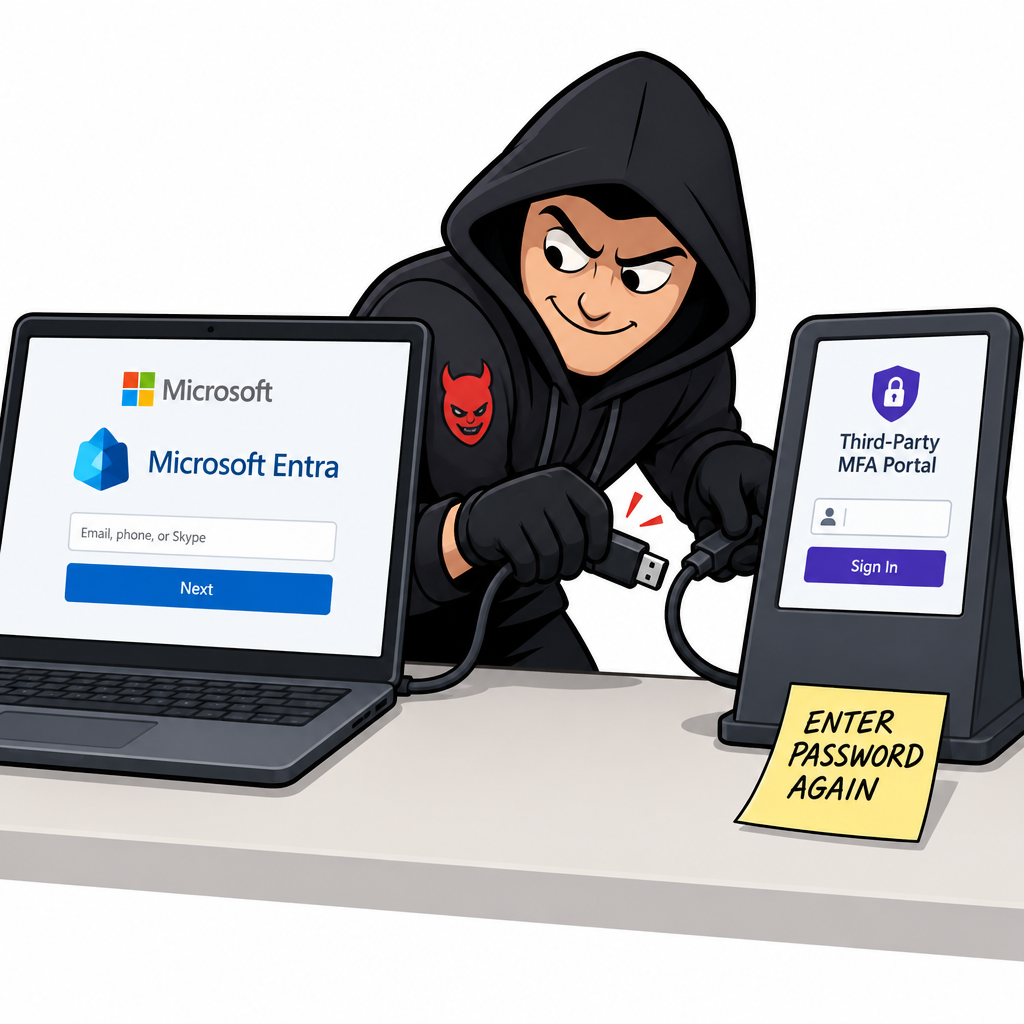
- Varonis “TrustSink”: rogue external MFA provider steals passwords: The technique targets environments using external MFA providers with Microsoft Entra, allowing an attacker with high privilege to register a malicious provider that inserts a convincing password prompt into the legitimate flow and harvests plaintext passwords. It is not initial access, it is a tenant persistence and credential siphon. Source: BleepingComputer
- Meta Muse: local hijack PoC, then hotfix: Wardle’s PoC shows an unprivileged local process can redirect Muse dictation to an attacker endpoint and potentially abuse the agent’s granted access. Meta hot-fixed quickly, but the broader lesson is that “agent permissions” become a multiplier for any local foothold. Source: Unite.AI
- Microsoft-led takedown: EvilTokens PhaaS and 12,000 compromised accounts: BleepingComputer reports Microsoft’s DCU and partners disrupted EvilTokens, described as a PhaaS operation that compromised over 12,000 Microsoft accounts and supported device code authentication at scale. This is the playbook for “MFA fatigue? no thanks, we will just OAuth you.” Source: BleepingComputer
- Check Point: exploitation observed, fix now for management zero-day: Check Point published an advisory saying it observed exploitation of CVE-2026-85102 and limited exploitation of CVE-2026-93616 (management pre-auth path traversal) with fixes available. If you run Check Point, you should treat this as an “assume scanned” week. Source: Check Point
Top CVEs

- CVE-2026-94127: F5 BIG-IP APM OAuth Authorization Server RCE. Reported as actively exploited, and affects deployments with an access policy plus OAuth profile on a virtual server, enabling unauthenticated remote code execution. Source
- CVE-2026-93616: Check Point Security Management pre-auth path traversal leading to script execution and arbitrary Java class loading. Check Point says it observed limited exploitation and released a fix on September 22, 2026. Source
- CVE-2026-85102: Check Point Security Gateway VPN certificate handling pre-auth RCE. Check Point says a fix has been available since September 9, 2026 and it is now seeing exploitation attempts against Spark customers globally. Source
- CVE-2026-76460: Cisco Identity Services Engine maximum-severity vulnerability reported as actively exploited and added to CISA KEV. Patch or isolate ISE, because identity infrastructure is always a beachhead. Source
- CVE-2026-75650: Adobe Commerce and Magento template-engine issue added to CISA KEV based on evidence of active exploitation. If you run Commerce exposed to the internet, treat it as incident response, not patch management. Source
Podcasts & Talks
- SANS Stormcast (Sep 23, 2026): GET with Body; Checkpoint, VeloCloud, BigIP and Microsoft Defender 0-days: A fast daily briefing that is actually useful for triage meetings. Worth it today because it lines up with the real-world edge and management-plane zero-days you are patching right now. Listen: SANS ISC
- Security Now (TWiT) Episode 1097: Mega Patch Tuesday Fallout: Good CISO listening if you need a broader take on patch-cycle fallout and how the security conversation is shifting with AI tooling and “outsourced” testing. Watch: TheTVDB listing
- The Secure Disclosure (Sep 22, 2026): “How to Break Into Cybersecurity When AI Takes Junior Jobs”: Not a breach story, but it is relevant to your 2027 staffing plan. If junior roles shrink, your future incident responders do too. Listen: The Secure Disclosure
Final Words
The pattern today is not “more bugs.” It is the widening blast radius of control-plane components that were never designed to be resilient under active exploitation. Edge auth boxes, management consoles, and agent apps are becoming the new domain controllers. And the uncomfortable implication is that your strongest segmentation work can still get bypassed if the thing enforcing access is the thing that gets popped.
This week, do three things:
- Patch or hotfix F5 BIG-IP APM for CVE-2026-94127 immediately, and validate whether any virtual servers are configured with OAuth Authorization Server profiles.
- Apply Check Point fixes for CVE-2026-85102 and CVE-2026-93616, then hunt for anomalous certificate-based VPN logins and management-web-service abuse in the same change window.
- In Microsoft Entra, audit who can modify Authentication Methods Policy, and alert on changes that register or alter external MFA providers (treat it like “new IdP added” severity).
Your turn: If an attacker got one privileged admin in your Entra tenant tonight, what is the one control that would stop them from persisting through your MFA stack tomorrow morning? Hit reply with your one-sentence answer, or drop a comment on the web version. I read every reply.
Know someone running BIG-IP APM as an OAuth Authorization Server because “it was easier”? Forward them this issue, it costs 30 seconds and the alternative costs a lot more. For forwarded and web readers: subscribe free at secretciso.org.
Stay vigilant, stay informed, and see you in the next edition of Secret CISO!