Secret CISO 11/4: **2,950 Servers Backdoored**, Fridge Hacks, Android RCE
Supply chain is the new perimeter. OpsShield says ~2,950 Linux servers pulled a malicious cPGuard update. Europe’s refrigeration controllers got hit again, and Android patched a no-click Framework RCE. Plus: Node-RED exploitation, Barracuda root paths, AWS JDBC RCE.
Today’s theme: the attacker does not need your perimeter if they can borrow your vendor’s keys, your OT remote access, or your update channel for an hour.
Today's Top 5
- 2,950 servers ran a fake update: OpsShield says an attacker abused its cPGuard update channel for about 70 minutes, then pulled root-level secrets from customer machines, and now the hard part starts, figuring out which keys were reused where. Source
- Supermarket fridges hacked, again: Dozens of European stores saw refrigeration controllers tampered with, food spoiled, and the industry got a fresh reminder that “remote maintenance” is also “remote attack surface.” Source
- No-click Android Framework RCE: Google’s November patches include a critical Framework bug that needs no user interaction, which means fleet patch latency is now the risk multiplier, not the exploit chain. Source
- Node-RED CVE goes live: VulnCheck says attackers are exploiting a max-severity missing-auth bug to push malicious flows, and the payload variety suggests this is becoming a “drop whatever works” automation lane. Source
- AWS Redshift JDBC RCE: AWS warns its Redshift JDBC driver could load and execute arbitrary classes if an attacker can influence connection parameters or credential profiles, which is a fancy way of saying “untrusted input can become code.” Source
Why today matters: Three very different incidents share one pattern: control planes are the new blast radius. Update channels, OT remote management, and developer connectivity glue (JDBC URLs, flow editors) are all places where “data” silently becomes “execution.” If you run internet-exposed admin surfaces, or you depend on niche vendors to push code to your fleet, you should be nervous this week.
XERJ Corpus Hub: If the OpsShield cPGuard incident hit your environment, an AI agent loading capa-rules could quickly classify the dropped binaries and scripts into capability buckets, then draft a hunt list for what they touched (keys, shells, persistence) in minutes. Browse more at hub.xerj.org.
Alright, let’s get into it.
Data Breaches
- OpsShield cPGuard update channel compromise: OpsShield says an attacker broke into its billing and licensing path, stole update publishing capability, and pushed a malicious cPGuard update that ran as root on customer servers during a short window on November 2. OpsShield says about 2,950 customer servers ran the fake update and that sensitive files and secrets may have been copied off those systems. Source: OpsShield
- cPGuard autoupdate used to deploy backdoor and steal data: BleepingComputer’s write-up adds distribution details, impacted versions, and practical guidance for responders who now have to assume credential material was exposed on affected Linux boxes. Source: BleepingComputer
- Chainstack discloses production environment access: The Hacker News reports Chainstack says an attacker accessed parts of its infrastructure and exposed customer data including password hashes, with the company framing it as part of a broader AI-assisted campaign. Treat this as a vendor credential and API key rotation drill, not a press cycle. Source: The Hacker News
Security Research

- European supermarket refrigeration controllers attacked again: AP reports a second wave of attacks affecting refrigeration and freezer systems across multiple countries, forcing food disposal in some locations. It is a tight example of “OT convenience features” becoming an availability and safety problem. Source: AP News
- Censys: new wave of refrigeration attacks, exposure angle: Censys summarizes reports and links the renewed activity to internet-reachable refrigeration controllers, which is useful for defenders who want to sanity-check whether their own cold-chain footprint is externally visible. Source: Censys
- Android November 2026 patch set: SecurityWeek highlights more than 200 fixed issues and flags a critical Framework RCE as the headline risk. For CISOs, the question is not “is it exploitable,” it is “how many devices will still be unpatched in 30 days.” Source: SecurityWeek
- Node-RED exploitation begins in the wild: SecurityWeek says VulnCheck observed exploitation of a critical missing-auth issue, with attackers deploying flows that download payloads and leave webshell-style access behind. The scary part is how automatable this looks. Source: SecurityWeek
- Barracuda: patch pair can lead to root on appliances: BleepingComputer details two Barracuda flaws where an auth weakness plus command injection can produce root access if the admin interface is reachable. If you have Barracuda gear, treat “admin UI exposure” as a vulnerability by itself. Source: BleepingComputer
Top CVEs
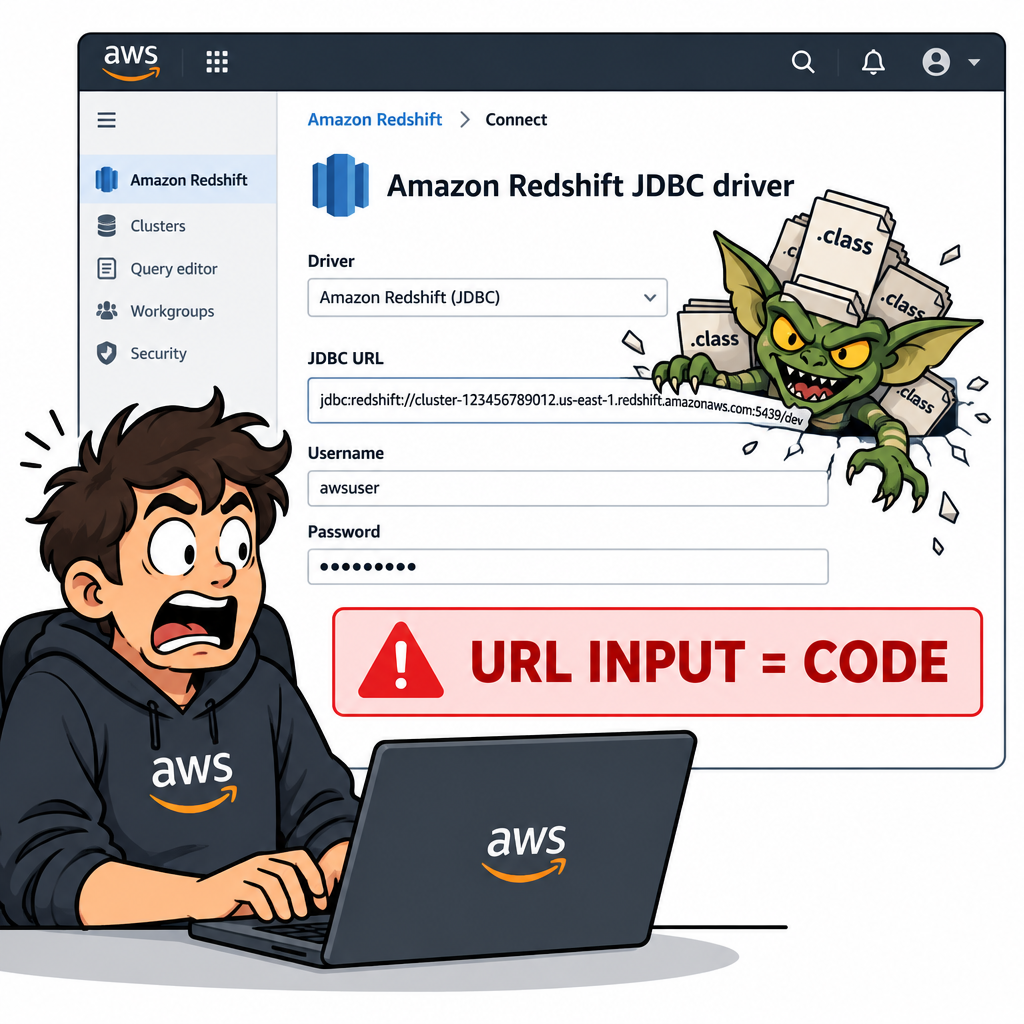
- CVE-2026-119084: AWS says the Amazon Redshift JDBC Driver could load and execute arbitrary classes under certain conditions when processing connection parameters or credential profile fields, and recommends upgrading to version 2.3.0. Source
- CVE-2026-121652: AWS says a stored XSS in maplibre-gl-js-amplify could execute attacker-supplied payloads when rendering popups or geofence list items, fixed in version 4.0.3. Source
- CVE-2026-58115: SecurityWeek says attackers are actively exploiting a missing-auth issue in Node-RED’s HTTP interface as used in Siemens SIMATIC IoT2050 Advanced contexts, enabling flow injection and code execution. Source
- CVE-2026-58868: SecurityWeek flags this Android Framework bug as the most severe item in November’s Android patches, described as a critical RCE with no user interaction required. Source
- CVE-2026-116606: BleepingComputer reports Barracuda says an authentication weakness in Email Security Gateway can be abused to modify global configuration, and combined with a second bug can lead to root-level impact if management interfaces are exposed. Source
Podcasts & Talks

- SANS Stormcast (Nov 3, 2026): A fast rundown that hits what a working CISO actually needs this week, including Barracuda ESG flaws and active ransomware pressure on NAS fleets. Listen: PodcastTrove
- Risky Business #857: “AI FUD intensifies”: Useful for separating real operational AI risk from marketing panic, and for calibrating what “AI-powered attacks” means in practice. Listen: Risky Business RSS
Final Words
The uncomfortable pattern today is that compromise is increasingly “transitive.” Your vendor gets popped, your fleet inherits their mistake. Your refrigeration contractor exposes a controller, your stores inherit the outage. Your app builds JDBC strings from semi-trusted sources, your runtime inherits the code execution. The common failure mode is not a missing patch, it is misplaced trust in who gets to supply inputs to high-privilege systems.
This week, do three things:
- If you run cPGuard, assume exposure during the November 2, 2026 window and rotate SSH keys, root credentials, and any secrets present on servers that could have pulled the malicious update.
- Patch or isolate Node-RED instances affected by CVE-2026-58115, and confirm adminAuth and network reachability for any embedded OT gateways that quietly ship with Node-RED.
- Push Android November updates with an SLA, and report exceptions by model and carrier, because CVE-2026-58868 is the kind of bug that punishes patch lag, not poor user behavior.
Your turn: If your software vendor told you today that a signed update might have exposed private keys on a chunk of customer servers, do you have a tested “rotate everything in 24 hours” playbook, or just a hope and a spreadsheet? Hit reply with your honest answer, or leave a comment on the web version. I read every reply.
Know someone running appliance admin UIs on the public internet because “it’s easier for IT”? Forward them this issue, and point them at the Barracuda and Node-RED items. It is a 30 second favor that can prevent a very long week. For forwarded and web readers, subscribe free at secretciso.org.
Stay vigilant, stay informed, and see you in the next edition of Secret CISO!