Secret CISO 11/5: 1.3M Android TVs Botnetted, Airlines Leak, Beget Wiped, WordPress Exploited
The week’s theme: third parties and “old” bugs keep becoming today’s blast radius. A 1.3M-device Android TV botnet gets dismantled, airlines disclose an Amadeus-linked breach, a Russian hoster loses cloud data, and WordPress exploitation goes KEV.
The internet is doing that thing where “non-critical” systems quietly become critical, until they bite you in the SLA.
Today's Top 5
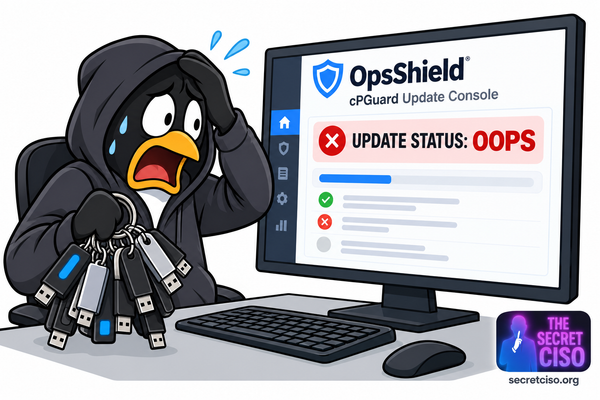
- 1.3M Android TV botnet: Google says a hidden backdoor enrolled over 1.3 million set-top boxes. Domains are down, but the devices are still sitting on networks like loaded dice. Source
- Airlines spill via Amadeus: Multiple Asian carriers are disclosing customer-data exposure traced to a vulnerability in an Amadeus booking-display environment. No payment data, but the access path is the story. Source
- Hosting provider data wiped: Russian hoster Beget says a cyberattack destroyed data across its cloud infrastructure and knocked over hundreds of sites. The operational lesson is nastier than the headline. Source
- Blood cold storage targeted: France’s national blood service says attackers raised temperature and defrost thresholds at three facilities via a refrigeration provider. Physical impact, delivered through remote monitoring. Source
- WordPress exploitation goes KEV: CISA tagged a WordPress core RCE as actively exploited, and Wordfence says it blocked 13,095 attacks in 24 hours. If your patch cycle is “monthly,” it is now “wishful.” Source
Why today matters: Today’s top stories all share the same shape: your blast radius now lives in someone else’s update pipeline, someone else’s booking display, someone else’s remote monitoring, or a device class you never meant to inventory. Attackers are winning by choosing the least-owned layer of your stack, then letting your dependencies do the spreading. Retail, travel, healthcare logistics, and any org with a long tail of unmanaged endpoints should be nervous.
XERJ Corpus Hub: Working the CVE-2026-119977 WordPress exploitation fire drill? An AI agent loading ghsa-db can pull related GHSA entries, map affected plugin and core ecosystems, and draft a prioritized “patch or mitigate” list for the sites you actually run in minutes. Browse more at hub.xerj.org.
Okay, now for the receipts.
Data Breaches
- More Asian airlines announce data breaches after attack on Spanish IT provider Amadeus: Japan Airlines, Cathay Pacific, Korean Air, Asiana Airlines, Singapore Airlines, and Malaysia Airlines disclosed customer-data exposure linked to an Amadeus booking-display environment vulnerability. Amadeus says there’s no evidence payment or financial data was accessed, and it has implemented fixes and enhanced monitoring. Source: The Record
- mSecure password manager hack prompts password reset warnings: mSeven Software is warning current and former mSecure users to change passwords, reset 2FA, and remove passkeys after a cyberattack in which an encrypted customer database was reportedly taken. The practical risk depends on vault encryption strength and user master-password hygiene, so comms clarity matters here. Source: BleepingComputer
- November 4, 2026 Public Notice of Security Incident (Kernel): Kernel says an attacker used a compromised hosting-provider credential to access 4 GPU-enabled servers in its infrastructure, with 3 running browser sessions and 1 containing no customer data. This is the modern “one login, many workloads” problem in miniature. Source: Kernel Blog
- Cyberattack wipes cloud data at major Russian hosting provider Beget: Beget is struggling to restore services after a cyberattack destroyed data across its cloud infrastructure, disrupting hundreds of websites. Even without a published extortion angle, this is a case study in how availability can be the whole breach. Source: The Record
Security Research

- Shutting the Door on the XCPE Botnet (Google): Google details takedown work against XCPE, a backdoor used to enroll more than 1.3 million Android TV set-top boxes into a botnet, plus steps aimed at firmware integrity on certified devices. The uncomfortable part is what defenders can and cannot do when the endpoint is a sealed consumer appliance. Source: Google Cloud Blog
- Google dismantles botnet secretly running on 1.3 million Android TV boxes: Additional context on how the botnet infrastructure was disrupted, and why owners of low-trust Android TV boxes should assume persistent compromise risk. This is a reminder that “shadow IT” is not only laptops and SaaS. Source: Ars Technica
- Hackers exploited iOS and Android flaws to infect phones: Researchers describe a large watering-hole campaign using previously patched iOS and Android vulnerabilities to deliver zero-click exploit chains after a user visits compromised or impersonating sites. The takeaway is patch lag as an access strategy, not a footnote. Source: Ars Technica
- UK school estate hit by 3AM ransomware in suspected AI-assisted attack: Bitdefender describes an intrusion where the operator’s command sequences show regular-interval iterative attempts consistent with AI-assisted workflows, and encryption of ~37 of nearly 50 reachable machines from an unmanaged host. Even if “AI” is only accelerating trial-and-error, that is still acceleration. Source: BleepingComputer
- Cyberattack disrupts blood storage refrigeration systems in France: Technical color on how attackers altered temperature and defrost settings via a supplier’s remote monitoring stack, with the supplier citing a third-party component vulnerability. CISOs with OT, building management, or cold-chain dependencies should read this like it happened next door. Source: BleepingComputer
Top CVEs
- CVE-2026-119977: A WordPress core RCE that CISA flagged as actively exploited and added to KEV, with a rapid tempo of observed attack traffic reported by Wordfence. If you run WordPress at scale, treat this like an emergency change window, not a Tuesday chore. Source
- CVE-2026-76506: Cisco UCS Central Software remote code execution vulnerability published in Cisco’s November 4 advisory set. For orgs with UCS Central in management plane scope, prioritize patching like it is part of identity infrastructure, because it effectively is. Source
- CVE-2026-20241: Cisco Identity Services Engine (ISE) authorization bypass vulnerability in the same Nov 4 advisory drop. Authz bypass in a network access control brain is the sort of “small” bug that becomes a large outage. Source
- CVE-2026-76419: Cisco Unified Communications Manager XSS vulnerability published Nov 4. XSS in admin-facing comms systems still matters because it often chains into credential theft and session hijack, and those systems tend to be long-lived. Source
- CVE-2026-58882: An Android “SMS of Death” style bug with a published PoC that can remotely crash unpatched devices without user interaction. Availability bugs on mobile still turn into security incidents when they hit exec devices during travel. Source
Podcasts & Talks

- Risky Business #858, The $6.3b laptop: This week’s panel runs through the Binance hack postmortem, Brazil’s crypto exchange incident, and Google’s “LLMjacking” framing. It is a clean executive listen for the question you will get: “Is AI making breaches easier or just louder?” Listen: Risky Business
- Security Now #1103, Nov 3 2026: The latest Security Now episode is a good refresher for boards who need a calmer explanation of the week’s crypto and AI-security headlines, minus the doom. Listen: TWiT
Final Words
Today’s underlying pattern is dependency drift: business-critical outcomes are now routinely mediated by systems security teams did not choose, cannot patch directly, and sometimes cannot even see. The threat model shift is simple, and annoying. You are defending outcomes, not assets. The uncomfortable implication is that your best control is often contractual and architectural, not a new EDR rule.
This week, do three things:
- Emergency patch or mitigate WordPress for CVE-2026-119977, then confirm via logs that exploitation attempts did not reach admin or plugin upload flows.
- Inventory Android TV and set-top boxes on corporate networks, and isolate or block egress for any unmanageable devices in response to the XCPE botnet disclosure.
- Review your third-party remote monitoring exposure for facilities and cold-chain vendors, and require a compensating control plan for any externally reachable management interfaces.
Your turn: If an Amadeus-style booking-display exposure hit your org tomorrow, do you know which third-party “view only” systems can still leak PII, and who owns the kill switch? Hit reply with your answer, or drop a comment on the web version. I read every reply.
Know someone who still thinks “Android TV boxes are harmless” on office Wi-Fi? Forward them this issue. It costs 30 seconds, and the alternative costs you a weekend. For forwarded and web readers, subscribe free at secretciso.org.
Stay vigilant, stay informed, and see you in the next edition of Secret CISO!