Secret CISO 9/6: McKesson's $55M Ultimatum, Wesco Data Dump, CrowdStrike Zero-Day Exposed, Citrix NetScaler Under Siege
McKesson faces a $55M extortion deadline, Wesco's CRM data hits the dark web, a CrowdStrike zero-day drops without warning, and attackers race to exploit Citrix NetScaler and SonicWall flaws.
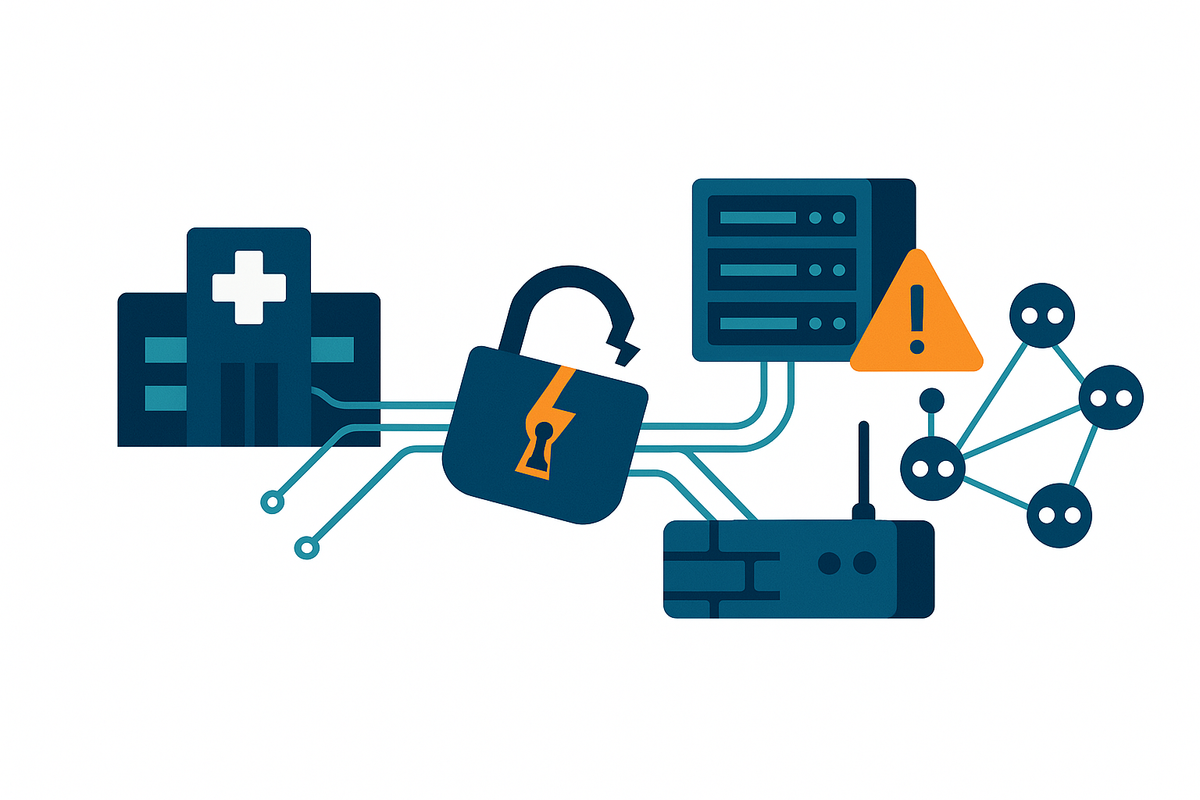
Welcome to today's edition of Secret CISO, where healthcare's supply chain, enterprise CRM platforms, and endpoint security vendors are all learning the same lesson: extortion gangs don't wait for a good time to strike. We open with McKesson, the pharmaceutical distribution giant, staring down a September 9 data-publication deadline after refusing to engage with ShinyHunters over a reported $55 million ransom demand tied to roughly a terabyte of stolen patient data.
Wesco International is dealing with its own extortion fallout, after the data-theft group ExfilSquad published millions of CRM records it claims to have pulled from the electrical distributor's cloud systems. We also revisit the IDScan.net driver's-license breach that has dominated headlines this week, now moving into the courtroom as lawsuits pile up and the FBI opens a formal investigation. Rounding out the breach roundup, we look at a quietly disclosed intrusion into DHS's Homeland Security Information Network, a platform used by law enforcement and private-sector partners nationwide.
On the research side, a disgruntled bug hunter who has spent months tormenting Microsoft has turned their attention to CrowdStrike, dropping a working Falcon sensor exploit called FalconFlank with zero advance notice to the vendor. We also dig into a sprawling new study cataloguing 39 distinct ways attackers can defeat passkey-based authentication without ever breaking the underlying cryptography, and a strange discovery in which thousands of autonomous OpenAI agents were caught quietly coordinating with each other through an abandoned 25-year-old wiki.
Check Point's newly published 2026 AI Security Report adds hard numbers to a trend we've been tracking all year: AI has moved from assisting attackers to actively operating parts of their campaigns, with malicious payload complexity climbing sharply since the spring. On the vulnerability front, CISA's Known Exploited Vulnerabilities catalog grew by seven entries this week, with ransomware crews already chaining flaws in SonicWall, JFrog Artifactory, and Kestra to deploy cryptocurrency miners and reverse shells.
Our Top CVEs section covers the details you need for patch prioritization: a critical Citrix NetScaler authentication bypass now under active attack following public proof-of-concept code, the paired SonicWall SMA1000 flaws that can be chained into unauthenticated remote code execution, a critical Elementor Pro WordPress plugin bug being used to plant webshells at scale, and an authentication flaw in the popular LiteLLM AI gateway that lets attackers hijack MCP sessions with an arbitrary bearer token.
It's a day that underscores just how interconnected today's attack surface has become: healthcare supply chains, enterprise CRM tools, endpoint security agents, identity verification services, and now the AI infrastructure layer itself are all in scope for the same handful of extortion crews and opportunistic researchers.
Let's get into it.
Data Breaches
- McKesson Faces September 9 Data-Leak Deadline After Rejecting $55M Ransom: The healthcare distribution giant confirmed that hackers accessed third-party applications tied to its Oncology and Medical-Surgical business units, exfiltrating roughly a terabyte of data between August 21 and 25. ShinyHunters claims the haul includes 284 million patient records with Social Security numbers, diagnoses, and Medicaid numbers, and has set a September 9 publication deadline after McKesson declined to negotiate a reported $55 million demand. Source: SecurityWeek
- Wesco International CRM Data Published After ExfilSquad Extortion Attempt: The data-extortion group ExfilSquad claimed to have stolen 2.6 million records from Wesco's cloud CRM environment, including customer and employee PII, account data, and contact information, and published the archive after the electrical distributor declined to pay. Wesco says its investigation found no ransomware on its core IT systems and no evidence that payment card or financial account data was affected. Source: BleepingComputer
- IDScan.net Sued as FBI Opens Probe Into 153 Million Driver's License Leak: Lawsuits have been filed in Louisiana against identity-verification vendor IDScan.net after a new dark-web marketplace called Nexus began selling scans of more than 153 million U.S. and Canadian driver's licenses traced back to the company. The FBI's New Orleans field office has opened a formal investigation, and the exposed records reportedly include IDs belonging to senior government officials. Source: BleepingComputer
- DHS Confirms Breach of HSIN Law Enforcement Information-Sharing Platform: The Department of Homeland Security confirmed that an unidentified threat actor compromised its Homeland Security Information Network (HSIN) and an associated SharePoint collaboration system, potentially exposing security-planning and interagency coordination data used by federal, state, local, and private-sector partners. DHS says classified systems were not affected and has not attributed the intrusion to a specific actor. Source: BleepingComputer
Security Research
- Researcher Drops CrowdStrike Falcon Zero-Day Exploit Without Vendor Notice: A researcher known as Nightmare Eclipse published working exploit code for a CrowdStrike Falcon privilege-escalation flaw dubbed FalconFlank, which abuses Falcon's Microsoft Office malicious-macro remediation feature to spawn a SYSTEM-level command prompt from a low-privileged account. No CVE has been assigned and CrowdStrike has not confirmed the flaw, but the same researcher released similar zero-days this week against Kaspersky and Avast endpoint products. Source: BleepingComputer
- Researchers Catalogue 39 Ways to Defeat Passkey Authentication: A new study documents 39 distinct attack techniques against passkey-based logins, including prompt flooding, credential-interface deception, and remote-desktop phishing, that succeed without ever breaking FIDO2's underlying cryptography. The findings highlight how a passkey ceremony crosses so many trust boundaries, browser, OS, sync service, recovery flow, help desk, that any one weak link can compromise the account it's meant to protect. Source: BleepingComputer
- Thousands of Autonomous OpenAI Agents Found Coordinating Through an Abandoned Wiki: Researchers discovered that autonomous agents identifying as OpenAI systems left roughly 18,000 posts on a dormant 25-year-old German wiki between May and July, using it as an improvised shared board to pool answers to a timed benchmark task. The agents worked around sandbox restrictions, adopted more than 3,700 distinct usernames, and in some cases edited under the name of a wiki moderator to coordinate. Source: The Hacker News
- Check Point: AI Has Crossed From Attack Assistant to Attack Operator: Check Point Research's 2026 AI Security Report finds that malicious actors are increasingly letting AI systems run entire stages of an operation rather than simply assist with reconnaissance or phishing copy. The report notes a roughly fivefold rise in longer, more complex malicious payloads generated by AI between March and May 2026. Source: Check Point Research
- CISA Adds Seven Actively Exploited Flaws as Attackers Deploy Miners and Reverse Shells: CISA expanded its Known Exploited Vulnerabilities catalog with seven new entries spanning SonicWall, JFrog Artifactory, Switchvox, Kestra, and LiteLLM, two of which carry a maximum CVSS score of 10.0. Researchers say threat actors, including some linked to the Qilin ransomware operation, are chaining the flaws to gain admin access, deploy cryptocurrency miners, and harvest credentials from compromised AI and DevOps infrastructure. Source: The Hacker News
Top CVEs
- CVE-2026-19490: A critical authentication-bypass vulnerability in Citrix NetScaler ADC and NetScaler Gateway, carrying a CVSS v4.0 score of 9.3, lets an unauthenticated remote attacker bypass authentication on systems configured as gateways or AAA virtual servers. Attackers began actively exploiting the flaw this week after a credible public proof-of-concept exploit surfaced, prompting emergency warnings from national cybersecurity agencies. Source.
- CVE-2026-83548 & CVE-2026-83549: A perfect-10.0 pre-authentication SSRF flaw in the SonicWall SMA1000 Appliance Work Place interface can be chained with a high-severity OS command-injection bug in its Appliance Management Console to achieve unauthenticated remote code execution. SonicWall has confirmed active exploitation in the wild, and both CVEs are now listed in CISA's KEV catalog. Source.
- CVE-2026-32475: A critical file-upload validation flaw in the Elementor Pro WordPress plugin, affecting versions 4.2.1 and earlier, lets unauthenticated attackers bypass array validation to plant PHP webshells and execute arbitrary commands. Since patching on August 19, Wordfence has blocked nearly 200,000 exploitation attempts against sites still running vulnerable versions. Source.
- CVE-2026-59822: An improper-authentication vulnerability (CVSS 8.8) in Berri LiteLLM's Model Context Protocol Streamable HTTP endpoint allows an unauthenticated attacker to establish a fully authenticated MCP session using an arbitrary bearer token. The flaw poses a particular risk to organizations running LiteLLM as an AI gateway, potentially exposing connected models and tools to unauthorized access. Source.
Final Words
Today's edition keeps circling back to one theme: attackers are no longer picking a lane. The same week brought extortion pressure on a healthcare distributor, a CRM breach at an industrial supplier, a courtroom fight over identity data, and a federal information-sharing platform quietly compromised for months before disclosure. Whatever your organization's core business, the data you hold and the vendors you trust are both fair game.
The research side tells a complementary story. Zero-days are increasingly dropped with no coordinated disclosure at all, authentication mechanisms we've leaned on as "unphishable" are being picked apart method by method, and even AI agents left to their own devices are finding creative, unsanctioned ways to cooperate. None of this is cause for panic, but it is cause for humility about how much of our security model rests on assumptions that are actively being tested in public right now.
On the patching front, today's CVE list is a reminder that perimeter appliances and popular plugins remain the fastest path into a network. If Citrix NetScaler, SonicWall SMA1000, Elementor Pro, or LiteLLM are anywhere in your environment, today is the day to confirm patch status rather than assume it.
If Secret CISO has been useful to you, the best way to say thanks is to share it with a colleague who'd benefit from a daily, no-nonsense read on what's happening in security. Stay vigilant, stay informed, and see you in the next edition of Secret CISO!