Secret CISO 11/23: GL.iNet Routers Backdoored, Card CVVs Stolen, Entra Metadata Leaked, Java4Shell
A cloud control plane got used as a malware sprinkler, a payment processor lost CVVs, and Microsoft had to email admins about read-only tenant metadata access. The pattern is clear: your “supporting” systems are now the breach perimeter.
Today’s attacks have a theme: attackers are not breaking your crypto, they are breaking your glue. Cloud management portals, monitoring APIs, and payment rails are where “small” mistakes become everybody’s incident.
Today's Top 5
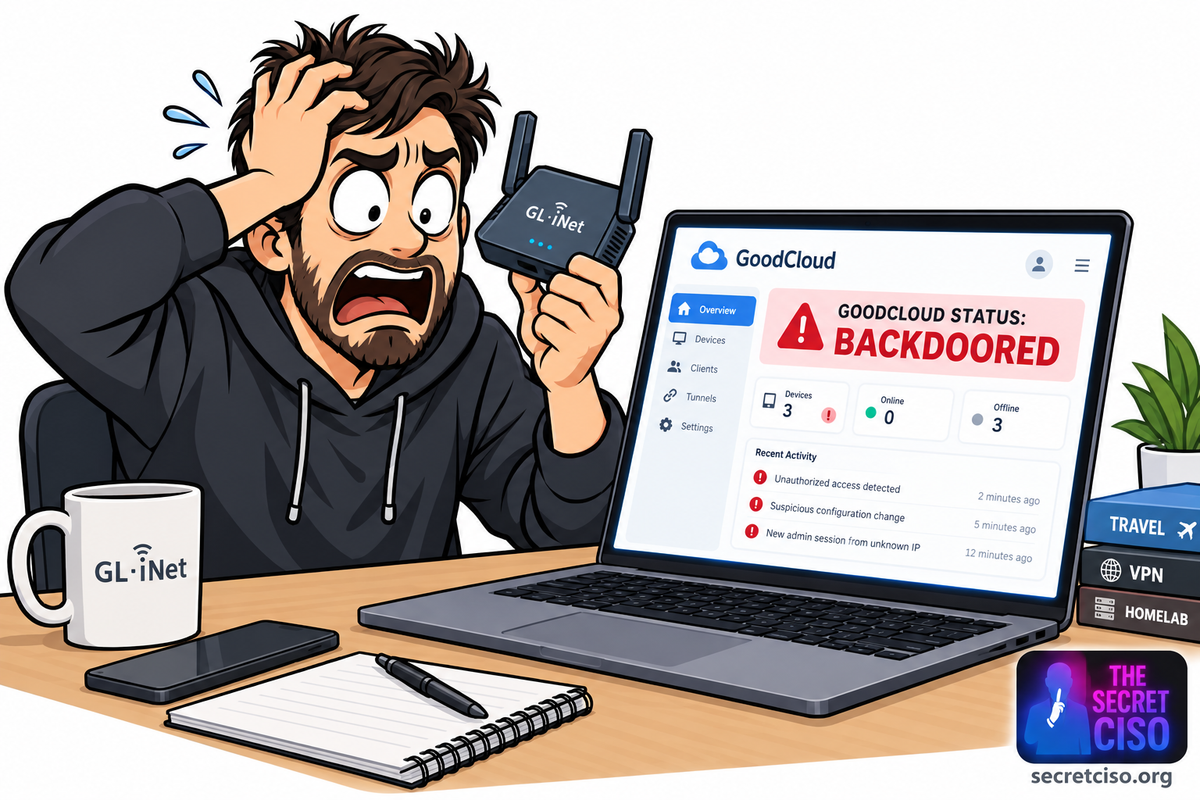
- GL.iNet cloud backdoors routers: A flaw in GL.iNet’s GoodCloud remote management let an attacker push malware onto some routers and KVM devices, and now every travel-router fleet is doing the same awkward inventory check. Source
- Credit cards plus CVVs stolen: Cleverbridge says a third party copied stored payment card data, including CVV/CVC codes, which is the kind of detail that turns “monitor your statement” into “reissue the card.” Source
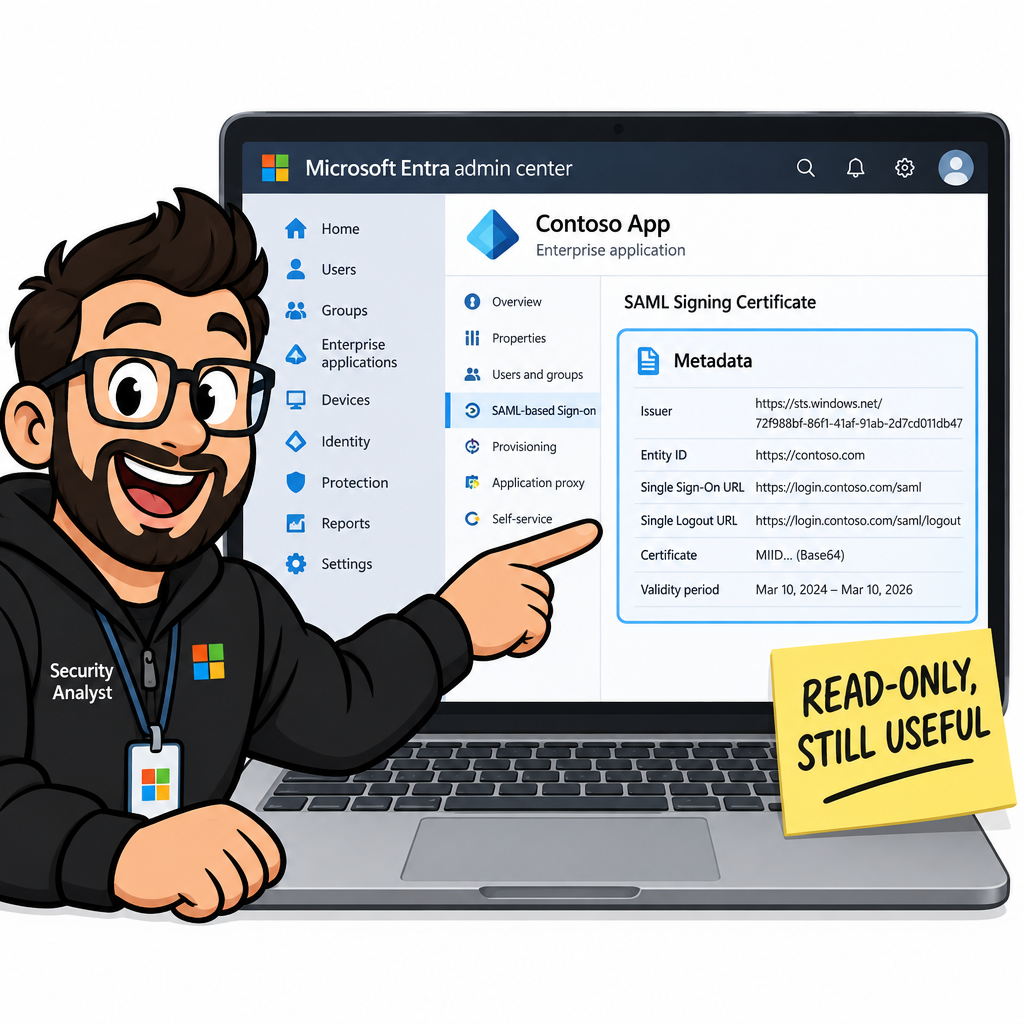
- Microsoft Entra metadata exposed: Microsoft says attackers exploited a bug in Entra Connect Health and got read-only access to admin emails and tenant configuration metadata, a tidy starter kit for targeted phishing. Source
- Rackspace Spot secrets at risk: With compromised credentials, attackers could create pods and read Kubernetes Secrets in some customer clusters, which is basically a “choose your own lateral movement” menu. Source
- Signal fights OS-level AI scraping: Signal is adding defenses to block Siri and Gemini style assistants from capturing chats, because “end-to-end encrypted” does not mean “safe from your own screen.” Source
Why today matters: The perimeter is drifting upward into shared services you do not think of as security controls: remote management clouds, health telemetry APIs, and payment processors. Attackers love these because one credential or one cloud-side bug becomes multi-tenant reach. If you run fleets, SaaS, or anything with “portal access,” you should be nervous.

Our pick, a19i: The GL.iNet incident is a reminder that attackers start with whatever internet-facing surface is easiest to automate, and for most orgs that is still web apps and APIs. a19i’s Automated Cyber Safari reports only findings it reproduced, so your team gets signal, not scanner noise. Get the report the same day, a19i.com.
Now, the rest of the feed, with receipts.
Data Breaches

- Cleverbridge payment card data theft (incl. CVV): E-commerce provider Cleverbridge says it detected unauthorized activity on November 4 and later determined a third party copied payment card data stored on its platform. Affected notices indicate card number, expiry date, and CVV/CVC were taken. Source: BleepingComputer
- Microsoft Entra Connect Health tenant metadata exposure: Microsoft notified organizations that attackers exploited a vulnerability in the Entra Connect Health API and gained read-only access to tenant contact and configuration metadata. The exposed data includes admin and technical contact email addresses, tenant IDs, and sync status details. Source: BleepingComputer
- Rackspace Spot breach and Kubernetes Secrets access: Rackspace warned that leaked credentials were used to access parts of Rackspace Spot on November 17. The actor could create pods, read Kubernetes Secrets, and list nodes and volumes in some affected customer orgs, prompting token revocation and credential rotation guidance. Source: BleepingComputer
- Bell Canada enterprise customer data exfiltration: Bell says an “agentic” threat actor accessed systems including a pre-production Maximo environment used for ordering and provisioning circuits and exfiltrated enterprise customer data. Bell says services were not impacted, and it is sharing IOCs with enterprise customers. Source: BleepingComputer
Security Research
- GL.iNet GoodCloud incident response details: GL.iNet says the cloud attack path is blocked and stable security firmware removes identified malware without requiring a factory reset. The vendor lists a process indicator (
crond -i /tmp/.log) and provides model-specific firmware downloads. Source: GL.iNet - Autonomous AI agents used to find a zero-day: Amazon Threat Intelligence describes suspected China-linked attackers using an autonomous agent framework (Cairn) to discover and exploit a path traversal zero-day in MONAI Label, going from API mapping to exploitation in minutes. It is a preview of what “commodity” AI-assisted exploitation looks like. Source: BleepingComputer
- Signal’s new “screen security” posture: Signal says OS-level assistant features can capture on-screen chat content, so it is adding controls that block extraction paths it validated through reverse engineering. If your threat model includes “helpful” assistants, this is the new battleground. Source: BleepingComputer
- Java4Shell blast-radius guidance (cloud providers): AWS published an ongoing status bulletin for CVE-2026-114938, including which managed services are impacted and how updates roll out. This is useful not because AWS is special, but because it maps the dependency graph most orgs never wrote down. Source: AWS
- Ghostscript “Upload2Shell” risk in conversion pipelines: SANS ISC highlights CVE-2026-125396 and why it matters most in web apps and tools that convert untrusted uploads, where Ghostscript can be a transitive dependency. If you do document rendering, you are in scope whether you know it or not. Source: SANS ISC
Top CVEs
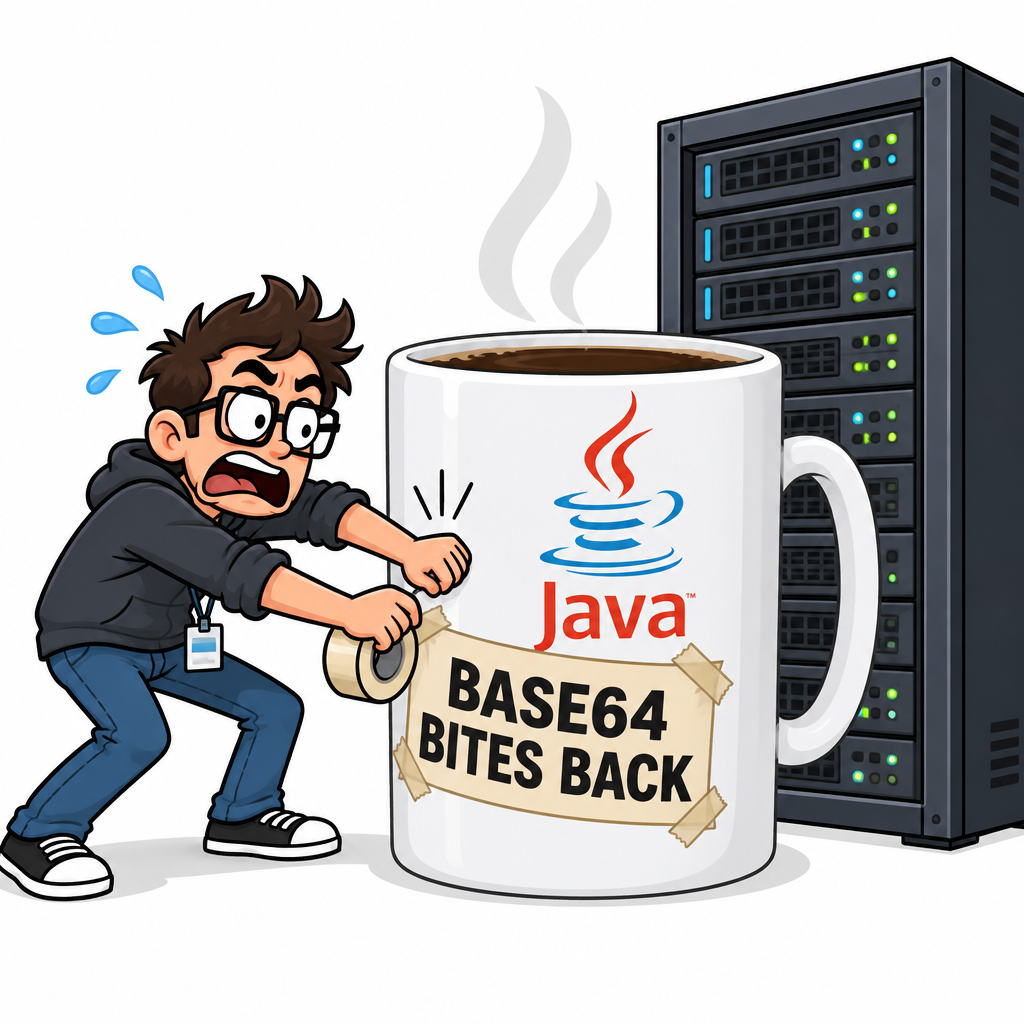
- CVE-2026-114938: A memory corruption issue in OpenJDK’s Base64 decoder intrinsic on certain x86-64 CPUs can enable unauthenticated remote code execution when attacker-controlled Base64 reaches the decoder (think Basic Auth, JWT, SAML, cookies). Patch your JDK builds or apply vendor-provided updates, then restart affected services. Source
- CVE-2026-125396: A Ghostscript Type 1 font loader use-after-free can be exploited via crafted documents in rendering and conversion pipelines, with particular risk where untrusted uploads are converted server-side. Inventory where Ghostscript is invoked indirectly (image conversion stacks, document preview, print workflows). Source
- CVE-2026-102764: A VMware vSphere stack issue in the Directory Service is tied to VMSA-2026-0009 and can allow an authentication bypass resulting in an authenticated administrator session under certain conditions. Treat this as patch-now infrastructure hygiene, not a “later” change window item. Source
- CVE-2026-131782: A WordPress Simple Shopping Cart (wordpress-simple-paypal-shopping-cart) deserialization issue can enable PHP object injection. If your ecommerce plugin stack is “set and forget,” it is also “set and get owned.” Source
Podcasts & Talks
- SANS ISC Stormcast (Nov 23, 2026): GL.iNet breach, Ghostscript CVE: A fast, practical listen for defenders who need the “so what” on the GL.iNet GoodCloud incident plus why Ghostscript shows up in places you did not expect. Listen: SANS ISC
Final Words
What changed this week is not attacker capability, it is attacker leverage. A single cloud control point can turn into a remote backdoor deployment channel, and “read-only” metadata leaks are now precision targeting data for the next phishing wave. The uncomfortable implication is that your security program is only as strong as your least-audited control plane.
This week, do three things:
- Hunt your router and KVM inventory for GL.iNet GoodCloud exposure, and apply GL.iNet’s published security firmware guidance where applicable.
- Rotate and audit credentials stored as Kubernetes Secrets for any Rackspace Spot clusters in your org, and review audit logs for suspicious Secret reads around November 17, 2026.
- Patch and restart Java runtimes potentially affected by CVE-2026-114938, then validate you are not decoding attacker-controlled Base64 in unauthenticated paths.
Your turn: If your remote-management vendor emailed you tonight saying “cloud path blocked, but devices already infected need updates,” do you actually know which teams own firmware rollout and how long it takes? Hit reply with your honest answer, or drop a comment on the web version. I read every reply.
Know someone running GL.iNet travel routers for on-call access, pop-up clinics, retail pop-ups, or field ops? Forward them this issue, it costs 30 seconds and the alternative costs a lot more. If you were forwarded this, subscribe free at secretciso.org.
Stay vigilant, stay informed, and see you in the next edition of Secret CISO!
Our pick: a19i Automated Cyber Safari. A swarm of frontier AI agents pentests your web app, human testers verify the findings, and the final report comes signed. Your app is mapped for free before you pay. Take the safari at a19i.com