Secret CISO 11/26: VMware vCenter Auth Bypass, Barclays Breach Filing, NGINX2Root, PHP RCE Pair
Holiday week, holiday-grade coverage. The past 48 hours showed the same ugly combo: internet-exposed admin planes, decade-old core infra bugs, and breach reality arriving via filings, not press releases.
Holiday weeks are when attackers cash out and defenders get “out of office” as a compensating control. The last 48 hours were basically a speedrun of old code, exposed admin planes, and slow disclosure.
Today's Top 5
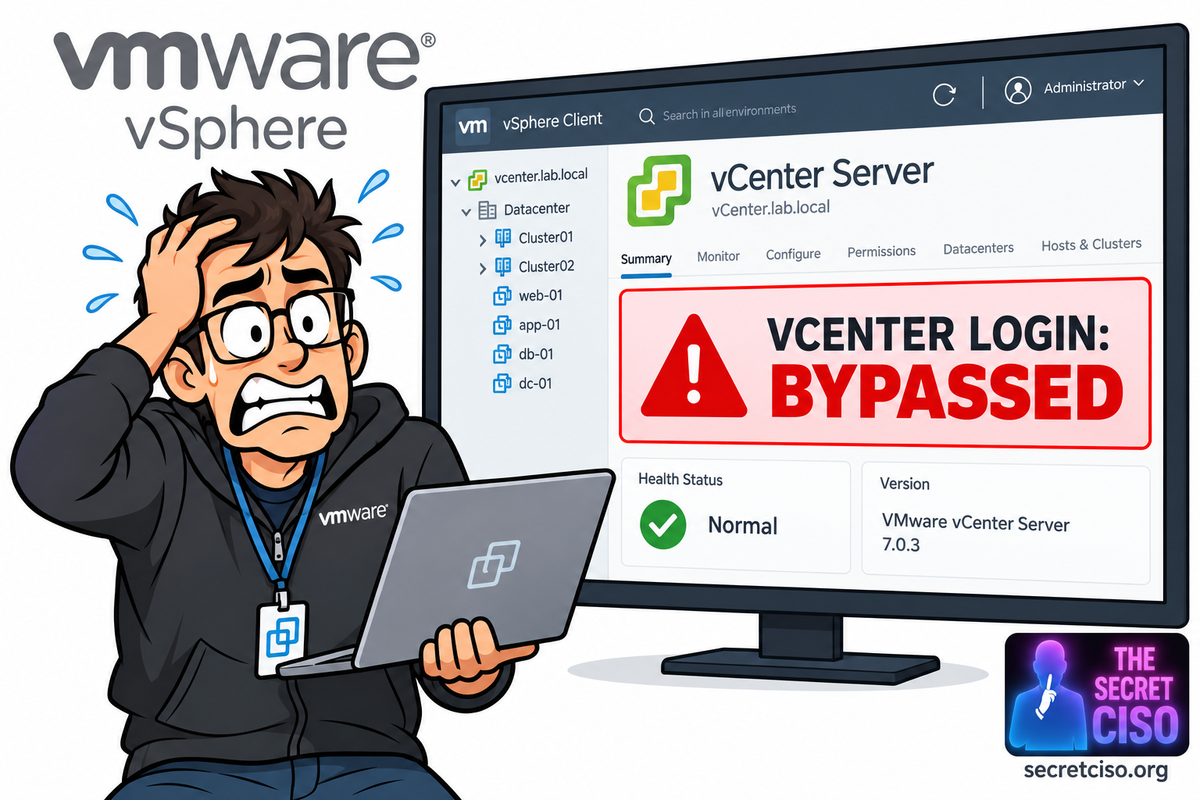
- 9.8 vCenter auth bypass: Broadcom dropped VMSA-2026-0011 with a critical vCenter VMware Directory Service auth bypass that is exactly the kind of bug people regret leaving on the internet. The patch list is long, and the clock is short. Source
- Barclays breach hits Texas filing: A ransomware incident involving Barclays Bank Delaware shows up as a Texas AG filing, the kind of “quiet confirmation” channel that matters more than leak-site theater. What data types were involved is the next question. Source
- Stormcast flags active SSH sweeps: SANS ISC notes aggressive SSH brute-force scanning from a Romanian VPS /24 range, with tooling fingerprints (odd TTLs, static IP IDs) that suggest coordination, not random noise. Source
- NGINX “nginx2root” lives again: Researchers keep turning AI loose on foundational plumbing, and NGINX got tagged with a decade-old flaw labeled CVE-2026-123007, with chatter about RCE paths in some deployments. Your edge fleet is still a software museum. Source
- Risky Biz: “AI routers” warning: This week’s episode tees up a theme CISOs should not ignore: tools that broker requests and route prompts are becoming a new trust boundary, and canary-token experiments are already testing the seams. Source
Why today matters: The pattern is “high privilege, low ceremony.” vCenter, SSH, and AI routing layers are all control points that default to convenience, then quietly become blast-radius multipliers when they are reachable. If you run anything that admins log into from a browser, assume it is already being enumerated at scale.

Our pick, a19i: Today’s vCenter auth bypass is another reminder that attackers do not need creativity when your internet-facing surfaces are permissive. a19i’s Automated Cyber Safari pressure-tests your own exposed web apps and APIs and reports only findings it reproduced, with request and response. The report usually lands the same day. Kick off a run.
Alright, let’s get specific and actionable.
Data Breaches

- Barclays Bank Delaware ransomware filing (Texas AG): A ransomware incident tied to Barclays Bank Delaware appears in a Texas Attorney General breach filing entry dated November 25, 2026. Treat it as a signal to watch downstream notifications, card ops, and customer comms timelines. Source: RansomwareLawGroup.com
- Osaki Electric confirms data exfiltration: Osaki Electric published an update stating it confirmed data was transmitted externally during the ransomware incident originally reported earlier in November. This is the moment IR moves from “availability” to “breach response.” Source: Osaki Electric (IR PDF)
- Norris McLaughlin leak-site claim (unconfirmed): A ransomware group listing surfaced naming the law firm Norris McLaughlin, but it is presented as an attacker claim without victim confirmation. Worth tracking if you share matters, data rooms, or email threads with them. Source: Apexward Pulse
- ClearPath Wealth Management leak-site claim (unconfirmed): Threat intel tracking notes a N0n leak-site post alleging exposure involving ClearPath Wealth Management, explicitly flagged as unverified by the tracker. This is still useful as early warning for partner risk reviews. Source: ThreatCluster
Security Research

- Broadcom VMSA-2026-0011: vCenter and friends: Broadcom published VMSA-2026-0011 covering a critical vCenter auth bypass (CVE-2026-123903) plus a long list of related issues across ESX, Workstation, Fusion, Tools, and Avi Load Balancer. This is patch-now territory for any reachable management plane. Source: Broadcom
- NGINX “nginx2root” (CVE-2026-123007) spotlight: Reporting highlights how AI-assisted auditing is surfacing old bug classes in critical infra, this time in NGINX with CVE-2026-123007. Even if your risk team says “we’re behind a WAF,” your fleet inventory still matters. Source: ITPro
- Tenable advisory: Mongoose X.509 parsing bug: Tenable published a research advisory (TRA-2026-71) about an out-of-range pointer offset issue in Mongoose’s X.509 ECDSA signature parsing. This is the kind of embedded dependency bug that shows up in weird places months later. Source: Tenable Research
- Apache httpd HTTP/2 race to RCE write-up: A PDF write-up summarizes CVE-2026-119618 as an Apache httpd mod_http2 race condition that can corrupt memory and potentially lead to RCE. HTTP/2 continues to be a rich seam for surprising failures. Source: melian.io (PDF)
- Vulnerability roundup: Apache SkyWalking BanyanDB: A daily roundup flags a BanyanDB issue (CVE-2026-86470) described as an unbounded query limit enabling memory exhaustion. Denial-of-service in data services is still a business outage, not a “nice to have” fix. Source: digitalizingworld watcher
Top CVEs
- CVE-2026-123903: Broadcom rates this vCenter VMware Directory Service issue critical (CVSS up to 9.8) and says a network attacker may bypass authentication to gain unauthorized access. If your vCenter is reachable from anywhere untrusted, assume it is being hunted. Source
- CVE-2026-123904: vCenter arbitrary file write while processing certain archives, with a path that can lead to code execution on the appliance if an attacker can reach the backup repository workflow. This is the reminder to lock down backup repos as hard as prod. Source
- CVE-2026-123007: Reported as a decade-old NGINX flaw nicknamed “nginx2root,” discussed in the context of AI-assisted bug discovery and potential RCE or crash scenarios in some configurations. Track vendor guidance and validate exposure by version and build. Source
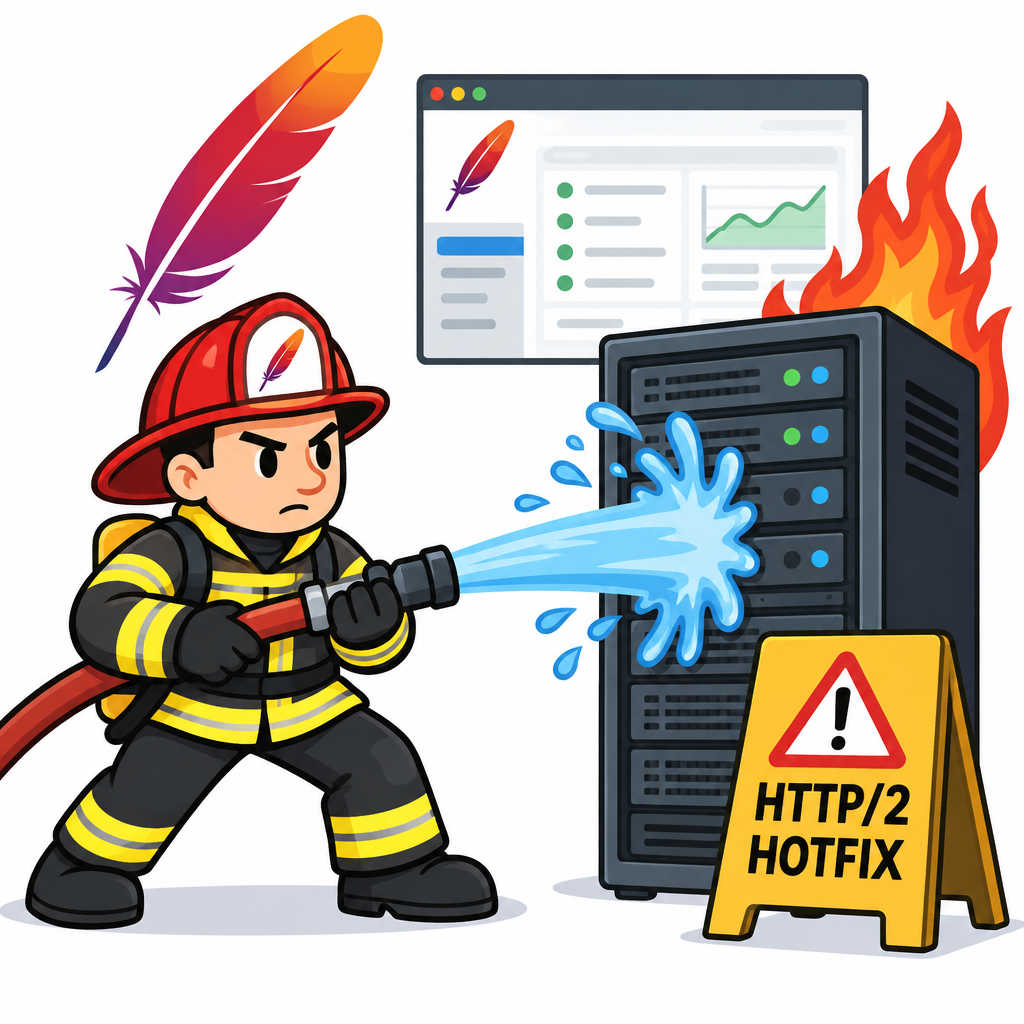
- CVE-2026-119618: Apache httpd mod_http2 race condition that corrupts worker process memory, with Apache rating it critical and noting potential RCE. If you expose httpd with HTTP/2 enabled, patching is a weekend project, not a backlog item. Source
- CVE-2026-86470: Apache SkyWalking BanyanDB issue described as enabling memory exhaustion via unbounded query limits. It is “just DoS” until it takes down the dashboards your on-call team needs to stop a real incident. Source
Podcasts & Talks
- Risky Business #861, “You can’t trust AI routers”: A practical listen for CISOs trying to separate AI buzz from real control-plane risk, including how routing layers and “helpful” tooling create new leak paths and trust mistakes. Listen: Risky Business
- SANS ISC Stormcast (Nov 25, 2026): SSH scanning and vCenter VMSA-2026-0011: Quick, operational, and directly tied to what your perimeter is seeing this week, including scanning patterns and a VMware patch push. Listen: SANS ISC
Final Words
The uncomfortable pattern today is that “management” surfaces keep getting treated like internal plumbing, but the internet keeps treating them like a public API. Add AI-driven discovery and you get faster weaponization of older bug classes, right when staffing is thinnest.
This week, do three things:
- Patch Broadcom VMSA-2026-0011 across vCenter and related VMware products, then verify vCenter is not reachable from the public internet, including via VPN split-tunnel mistakes.
- Hunt for exposed SSH and enforce key-only auth plus rate limiting, then review logs for coordinated brute-force patterns like wide /24 scanning.
- Inventory edge web server versions (NGINX, Apache httpd) and prioritize updates for HTTP/2-enabled services, explicitly tracking CVE-2026-123007 and CVE-2026-119618 in your change plan.
Your turn: If vCenter auth got bypassed at 2 a.m. this weekend, who would notice first, your SOC, your VMware admin, or your attacker? Hit reply with the honest answer, or drop a comment on the web version. I read every reply.
Know someone who still has vCenter exposed for “quick admin access”? Forward them this issue before the scanners do. For everyone else, subscribe free at secretciso.org.
Stay vigilant, stay informed, and see you in the next edition of Secret CISO!
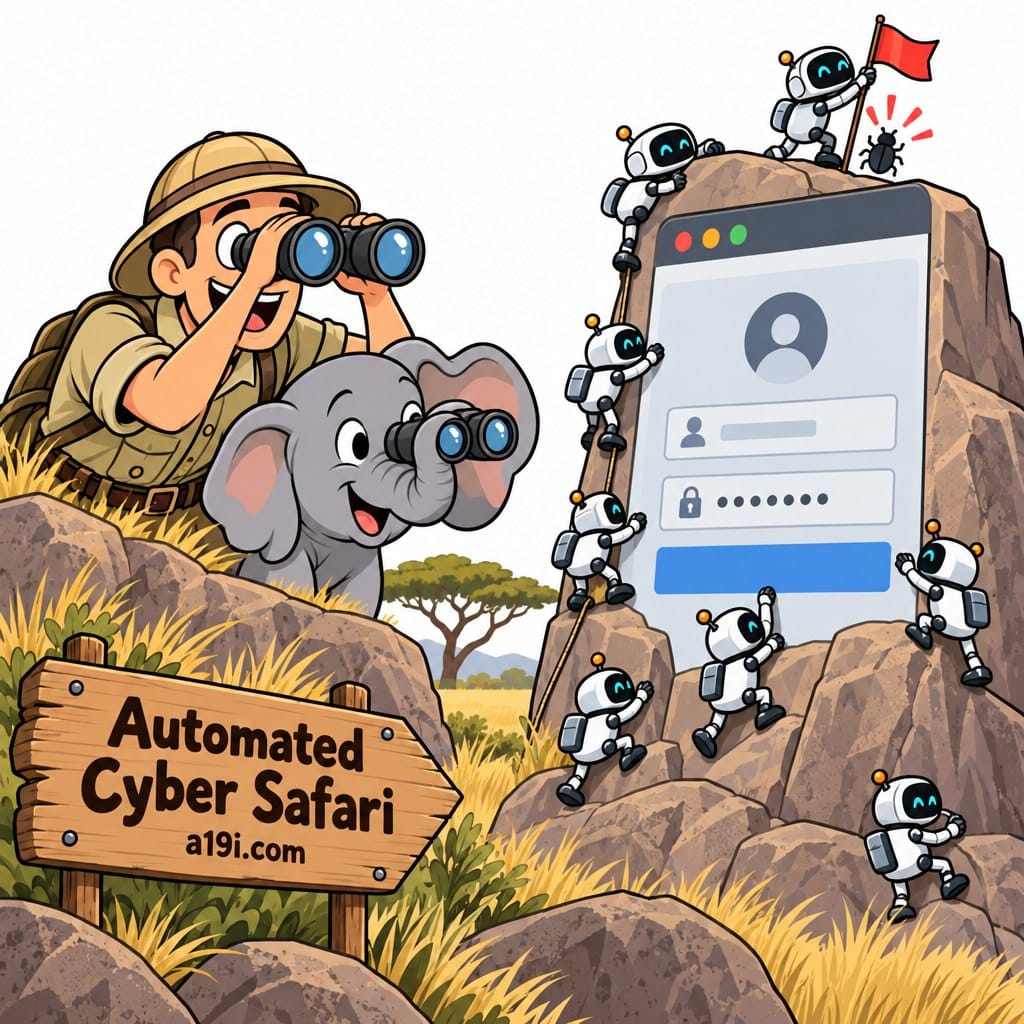
Our pick: a19i Automated Cyber Safari. A swarm of frontier AI agents pentests your web app, human testers verify the findings, and the final report comes signed. Your app is mapped for free before you pay. Take the safari at a19i.com